
Growth has become materially more expensive. Across B2B technology markets, sales and marketing acquisition costs continue to rise while customer payback periods lengthen and expansion efficiency remains underutilized. For many organizations, the result is increasing customer acquisition cost and declining revenue productivity. The average B2B SaaS company now spends $2 to win $1 of new recurring revenue, and the weakest quartile spends closer to $2.82. Acquisition costs have climbed 222% over eight years, while the customers being acquired are worth less and remaining customers for shorter periods. Median LTV:CAC has compressed from 4.5x to 3x in four years. Most marketing leaders can’t see the problem clearly, because the fully loaded number lives in finance, not on their dashboards.
Leading organizations are already demonstrating a path forward. Expansion revenue costs $0.20–$0.69 per dollar against $1.50–$3 for a new logo, and it now drives close to half of new ARR. Collapsing combined CAC by 30%–40% takes four moves run together: rebalancing spend toward expansion, modernizing the demand center, pricing as well as packaging for protection and covering accounts with precision.
The Economics of Technology Growth in 2027
Ask a CMO what it costs to win a customer and you’ll get a confident answer: cost per lead, per MQL, per opportunity, broken out by channel and sitting on a live dashboard. Ask for the fully loaded figure, the one that folds in seller comp, sales-engineering hours, BDR headcount, tooling and overhead, and the confidence tends to fade. That number usually lives in a finance spreadsheet, and marketing rarely goes looking for it.
But it’s worth going to look for, because that number is moving in the wrong direction. Across B2B SaaS, the typical company now spends $2 to bring in a single dollar of new recurring revenue—and that’s the middle of the pack. The weakest quartile is closer to $2.82. Zoom out and the slope is steeper than any single figure suggests: Acquisition costs are up 222% over eight years, most of that arriving since 2023, while deals take longer to close and payback periods stretch past a year and a half. Companies are underwater on new customers for the better part of two years before they turn a profit on them.
The cost of winning customers is only half of the squeeze. What those customers are worth is shrinking at the same time. Tracking a set of sub-$250M SaaS companies across five years surfaces a pattern any board sits up for:

Retention tells the same story from the other side: Net revenue retention has flattened to 101%, meaning the average company barely grows its existing base once churn is counted.
So why do so many go-to-market models still run on landing logos? Mostly habit, because it’s how quotas have always been drawn. But the economics have quietly flipped. Expansion already supplies close to half of new recurring revenue for companies under $100M, and roughly two-thirds once they clear a billion. The most productive pipeline a company owns is, increasingly, already under contract.
And the clock isn’t neutral. The pressures that opened this gap are still tightening, and each quarter of waiting makes the curve steeper to climb. The window where efficient growth counts as a differentiator is the one closing now; on the far side of it, efficiency won’t be an edge at all, just the price of staying in the game.
Expansion Economics: The Underutilized Growth Lever
Every commercial model has one line item that quietly earns more than it costs. In most technology companies, it’s also the one starved for budget. Growing an account you already have runs somewhere between $0.20 and $0.69 for each dollar of contract value; going out and winning a new one costs $1.50–$3 for the same dollar. Customer marketing, lifecycle programs and expansion campaigns together are the cheapest pipeline in the building, yet they get the smallest line on the plan:

A motion that closes three times as often, in half the time, at a fifth of the cost—and it’s the one that most orgs under-resource.
If the efficiency case doesn’t move a CFO, the valuation case will. Net revenue retention turns out to be the metric most tightly bound to what a SaaS company is worth: lift it ten points and enterprise value tends to climb 20%–30%. Across a large sample of B2B SaaS companies, the best-retaining quartile trades at roughly 24x revenue against 5x for the worst—a five-to-one spread traced to a single number. The compounding is why. A business holding 120% NRR grows its existing base a fifth every year without signing anyone new, doubling that revenue in under four years. A business stuck at 100% is on a treadmill, buying every point of growth at full acquisition price.
One caution before chasing any of this: expansion can’t outrun a leaky base. Gross revenue retention—what you keep before a single upsell—is the honest read on product health, and it’s slipping (median down from 90% to 88%). Healthy-looking NRR can sit on top of a GRR in the low 80s, which just means the expansion team is sprinting fast enough to hide the drain. Below roughly 88%, a company is replacing more than a tenth of its revenue every year before it grows at all, and replacement at $2 per new dollar is brutal on efficiency. Fix the floor first.
The organizations acting on this have stopped nudging budgets around and started rebuilding around the math. For many organizations, the customer base has become the most underleveraged growth asset.
Awareness Alone Does Not Drive Improvement
Understanding that expansion is cheaper doesn’t lower anyone’s CAC. Rewiring the commercial model does. The technology CMOs collapsing acquisition cost (by 30%–40%) aren’t running one clever play; they’re executing four at once and letting them reinforce each other.
Rebalance toward expansion.
Shift the split decisively toward expansion, tie a real share of variable comp to renewal and growth, and put four functions (Sales, Success, Product and RevOps) on one shared view of account health.
Modernize the demand center.
Pull fragmented BDR and SDR teams out from under sales, consolidate them under marketing with shared qualification and ML-based scoring and start measuring fully loaded blended CAC instead of channel-level cost per lead.
Engineer pricing for protection.
Keep critical capabilities in the core plan, move AI and value-add features into usage-based tiers and arm sellers with build-versus-buy proof at every renewal.
Cover with precision.
Tier accounts by risk and expansion potential rather than size, concentrate spend where the upside is and refresh segmentation on a tight cadence instead of once a year.
None of the four is the answer alone. Expansion economics lower the replacement burden, a modern demand center converts better leads faster, sharper pricing opens natural expansion paths and precise coverage concentrates every dollar where it compounds. Run together, they multiply. The following sections outline each move in detail: the mechanics, the benchmarks and the organizations already running them.
The 2027 CAC Transformation Framework
Each move below is drawn from Alexander Group’s work across hundreds of technology companies and laid out the same way: the problem it solves, the recommended shifts, the organizations that made them and the benchmarks to measure yourself against.
These four moves reinforce one another. Expansion improves portfolio economics, demand-center modernization increases decision speed, pricing and packaging improve value capture and precision coverage matches resources to opportunity.
Strategy 1
Rebalance Growth Investments Toward Expansion Economics
The Problem
Combined S&M spend now exceeds $2 for every $1 of new ARR, while expansion runs a fraction of new-logo cost—three to ten times more efficient. Yet 70% of marketing organizations still allocate less than 15% of budget to customer marketing, cross-sell/upsell campaigns and lifecycle engagement programs.
The Recommended Strategy
Restructure the commercial model so that renewals and expansion become the primary source of growth. This requires three structural shifts:
- Rebalance investment allocation: Move from a 70/30 new-logo/expansion split to 50/50 or even 40/60 for mature customer bases. Companies at $50M+ ARR generate 50%–67% of new ARR from expansion. On a different cut, those with 120%+ NRR command revenue multiples of 10 to 12 times (vs. six to eight times) for companies at 100% NRR.
- Restructure compensation to reward retention and expansion: Variable compensation tied to renewal/expansion is trending from 10%–20% to 40%–60%, reflecting a fundamental reorientation of commercial priorities. CS and Sales jointly own expansion quotas with shared health-score operating models.
- Build dedicated expansion marketing capabilities: 58% of high-growth organizations are investing in customer journey architect capabilities, and 33% are planning content strategy capabilities—both essential to customer-led growth.
Best Practices
- Implement cross functional "Save and Expand" squads. Sales, CS, Product and RevOps share a single view of health, risk and opportunity with quarterly campaigns focused on specific at-risk or expansion-ready cohorts.
- Deploy value reviews tied to hard ROI, not just product usage metrics. Structured QBRs quantify the cost of churn and revenue potential of expansion.
- Invest in multi-product adoption. Users who adopt integrated suites achieve 92% gross retention vs. 89% for single-product users, creating natural cross-sell/upsell paths.
- Implement AI-powered health scoring. That way, teams can identify expansion-ready accounts and at-risk renewals in real time.
Case Study: $800 Million Enterprise Applications—Expansion-First Revenue Model
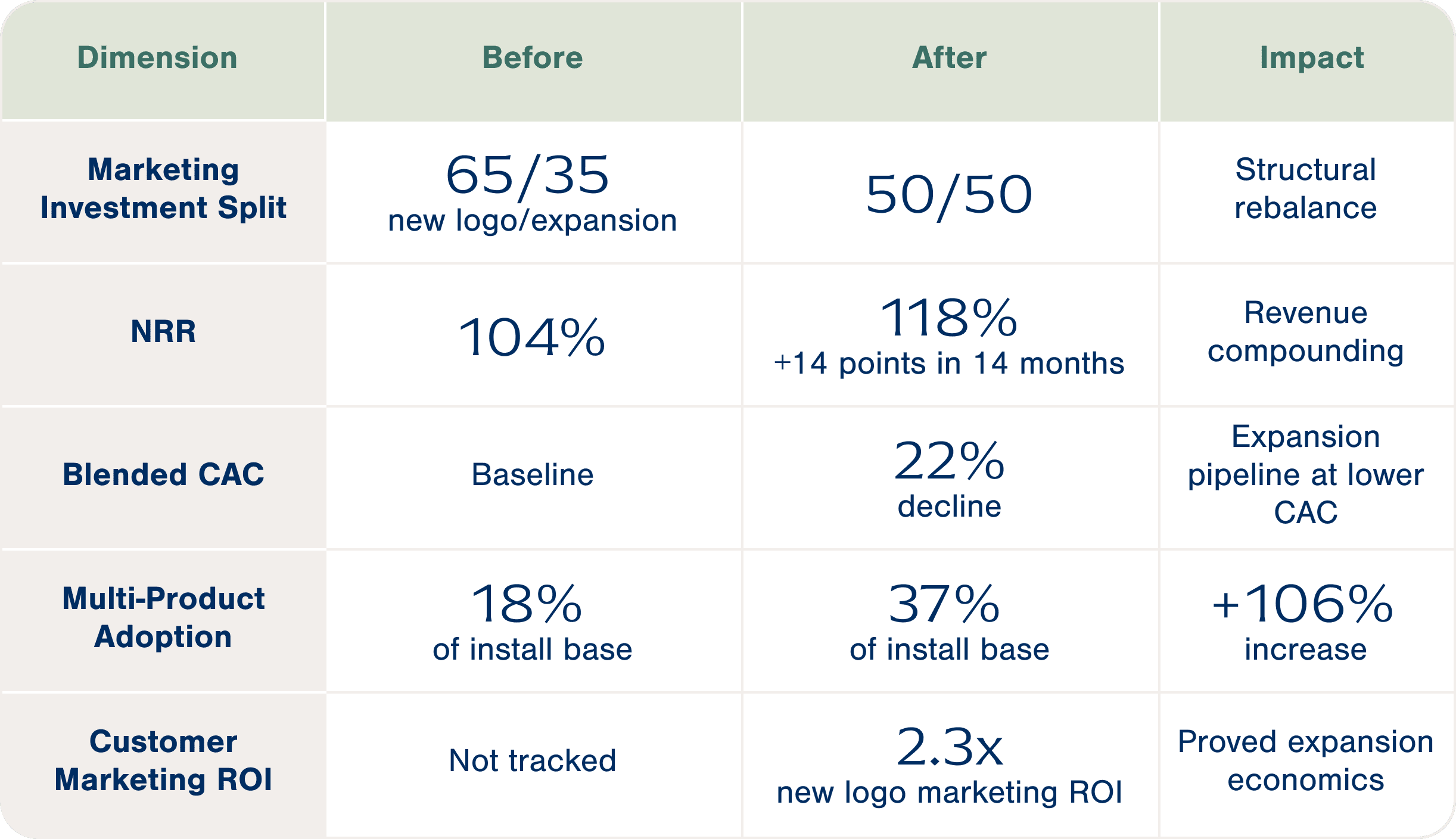
We spent three years and $40 million chasing new logos while our customer base quietly eroded. When we finally built a dedicated expansion marketing function with its own pipeline targets, our NRR jumped from 104% to 118% in 14 months—and our blended CAC dropped 22%.
Vice President of Marketing, $800 million enterprise SaaS (applications)
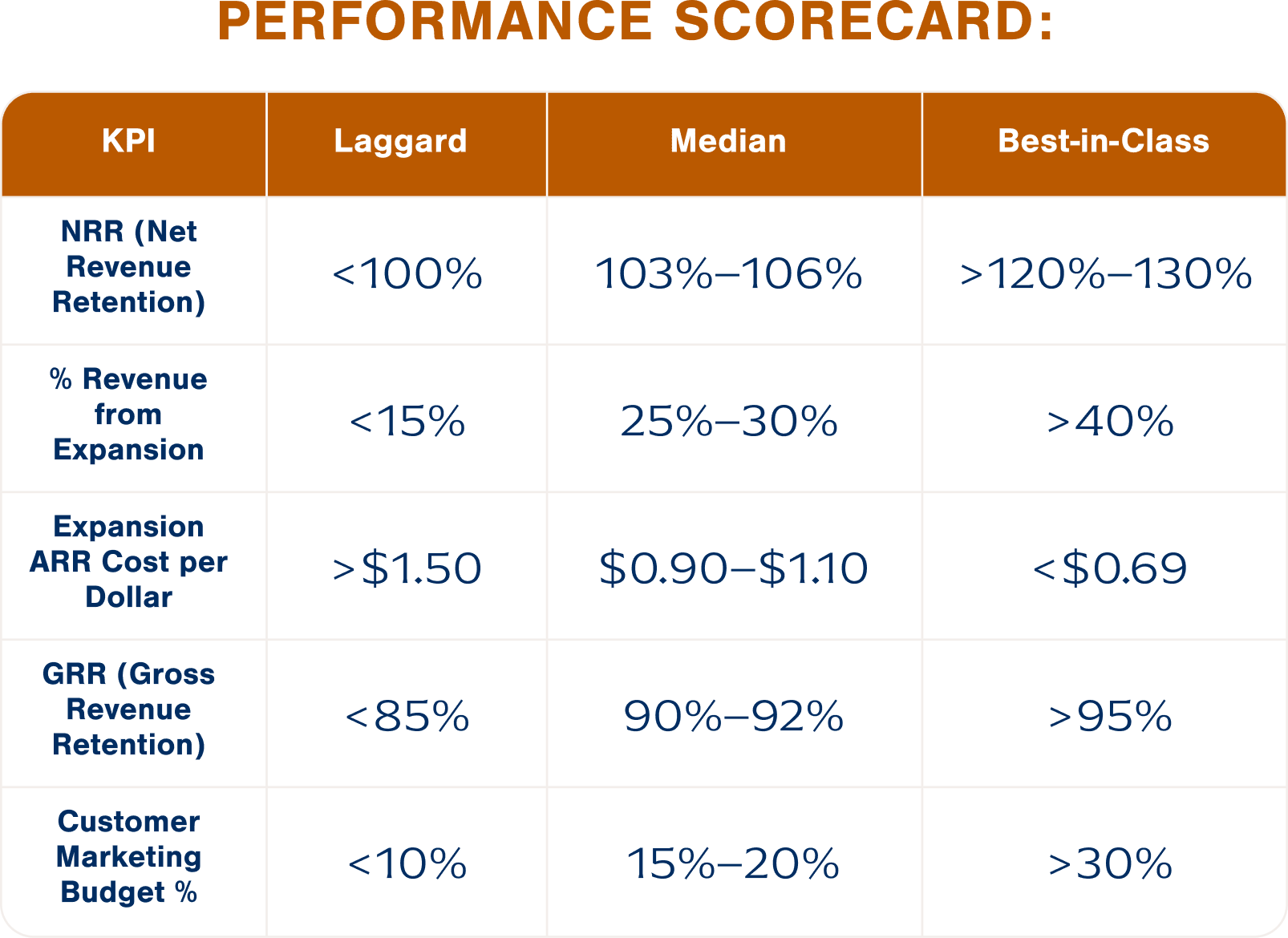
Sector View: Applications
Applications software feels feature substitution first: When a single-purpose app’s core function can be rebuilt with AI, the single-product vendor is the most exposed in the market. Expansion is the moat. Accounts running three or four integrated products don’t rip out a workflow they’ve woven together, which is why multi-product adoption is what holds retention here. It’s also why forced migrations pushed through without proof of value backfire. The earliest cohorts churn out of the very consolidation you were trying to drive.
Management Implication: Reallocate a defined portion of growth investment toward adoption, retention, cross-sell and upsell motions, with shared accountability across marketing, sales and customer success.
Strategy 2
Modernize the Demand Center to Improve Revenue Productivity
The Problem
Most tech organizations operate fragmented BDR/SDR teams under sales with subjective lead qualification, producing a 30%–50% MQL bleed rate and rising CAC at 22%+ CAGR. Meanwhile, B2B SaaS CAC has kept climbing—roughly $1,200 per customer in 2026, with LinkedIn ad costs up 89% and Google CPC up 164% since 2019.
The Recommended Strategy
Consolidate fragmented BDR/SDR functions under marketing into a modern demand center, with AI-powered lead scoring, ideal customer profiling and agentic workflows:
- Centralize business development under marketing: Create distinct demand center roles with comp plans, standardized lead qualification criteria and ML-based scoring incorporating ICPs and personas.
- Deploy agentic AI applications: 55% of high-growth orgs already use AI for lead scoring and predictive analytics. AI-driven campaigns deliver 22% higher ROI, 32% more conversions and 29% lower CAC compared to traditional methods.
- Implement true blended CAC measurement: Tracking marketing CAC alone hides total costs including sales resources. Combined S&M CAC is the true efficiency metric that separates strategic decision-making from tactical optimization.
Best Practices
- Standardize MQL-to-SQL definitions across sales and marketing. Eliminate the bleed rate by aligning the qualification criteria.
- Shift from MQL-centric models to marketing-qualified account (MQA) frameworks. This is done with always-on demand systems and integrated paid/owned/earned channel strategies.
- Allocate budget based on marginal efficiency, not legacy spending patterns. High-growth firms engineer demand strategically, not historically.
- Design for "terminal velocity." Set maximum capacity targets based on AI-driven bandwidth expansion and work backward to redefine roles quarterly.
Case Study: $300 Million SMB SaaS—Demand Center Transformation
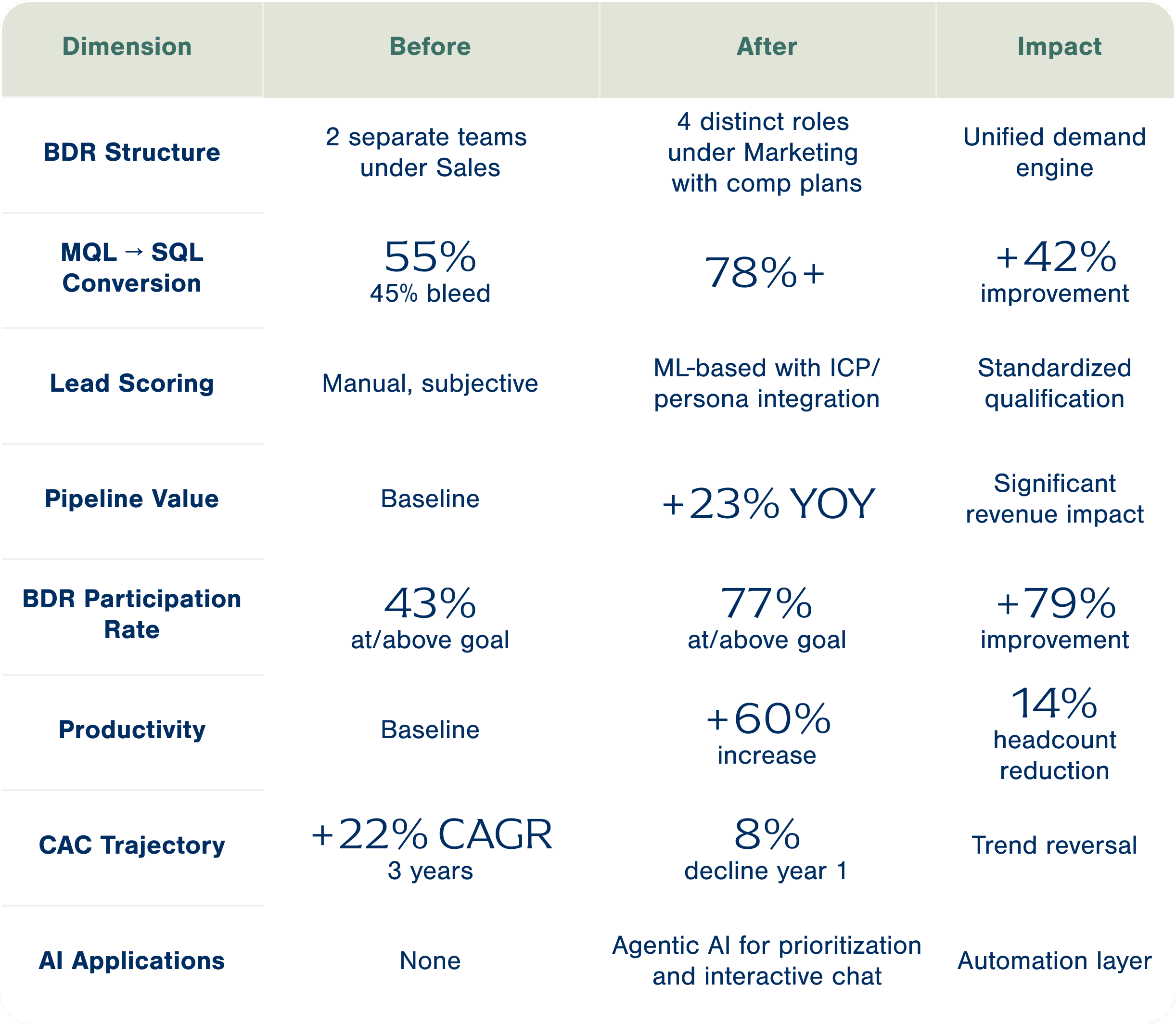
Our CAC had increased three years consecutively at 22% CAGR. We had two separate BDR teams sitting under sales with a 45% MQL-to-SQL bleed rate. After building a modern demand center under marketing with four distinct roles and AI-powered lead scoring, pipeline value increased 23% year-over-year, BDR participation went from 43% to 77%, productivity increased 60% and we halted the upward trajectory of CAC. It actually declined by 8% in the first year.
chief marketing officer, $300 million SMB-focused SaaS
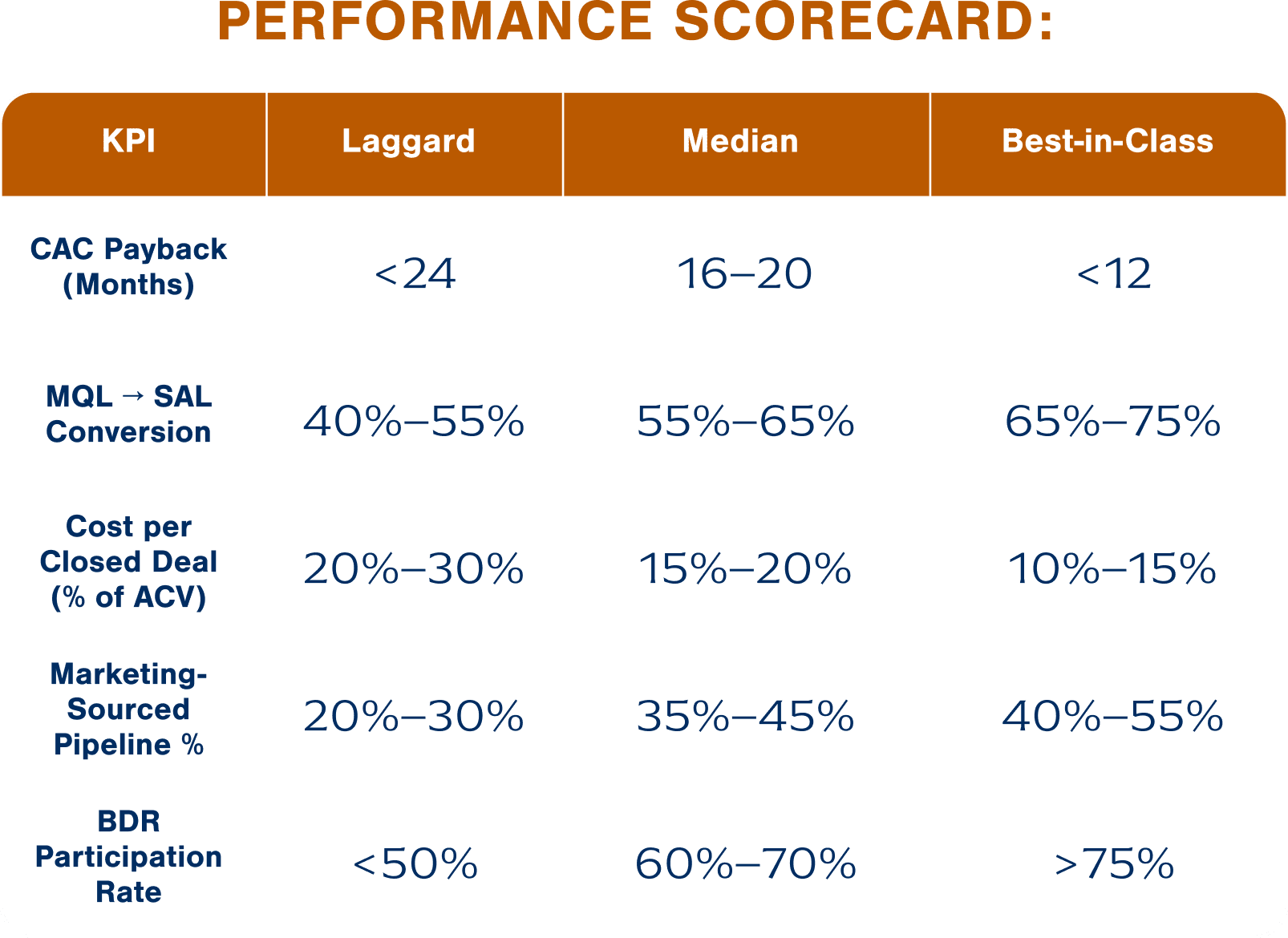
Sector View: Infrastructure and IT Ops
Infrastructure changes what the demand center is even scoring. When the buyer is a practitioner who adopts through self-service long before sales ever engages, the highest-value signal isn’t a form fill—it’s product usage. The demand center earns its keep here by instrumenting product-qualified signals and routing on them: tech-touch automation carries the self-serve long tail, while human coverage is held back for the accounts already showing expansion intent in the telemetry.
Strategy 3
Optimize Pricing, Packaging and Revenue Protection
The Problem
AI is enabling buyers to build in-house what they previously purchased as SaaS, noted as the “SaaSpocalypse.” Median SaaS growth has fallen from 47% in 2024 to 26% in 2026, and sales cycles have stretched from 107 days to 134 days. When buyers can build 80% of a product’s functionality using AI agents and low-code platforms, feature selling becomes obsolete.
The Recommended Strategy
Marketing must shift from demand generation to demand protection—arming every GTM motion with value-proof frameworks while deploying surgical pricing and packaging to capture new budget:
- Introduce AI add-ons and usage-based pricing elements: Capture AI-related budget instead of losing it to in-house development. Critical features stay in core plans; AI/value-add features create upsell paths.
- Arm sales with build-vs-buy battle cards and ROI calculators: Marketing becomes the first line of defense against churn and commoditization with value-proof frameworks that quantify the total cost of building vs. buying.
- Rebundle strategically to protect core revenue: Ensure critical features stay in base plans while AI/value-add features create natural expansion paths. Train and incentivize sales on pricing/packaging plays at renewal.
Best Practices
- Deploy laser-focused ICP targeting. This entails definitive, differentiated use cases, talk tracks, battlecards and enablement for each segment.
- Implement consumption-based pricing. One that aligns vendor revenues with customer value realization, which is particularly critical in infrastructure and cybersecurity sectors.
- Build value-proof frameworks. Using ROI calculators, time-saved metrics and cost-avoided documentation for every renewal and expansion conversation.
Case Study: $1.2 Billion Cybersecurity Platform—Platform Consolidation as CAC Lever
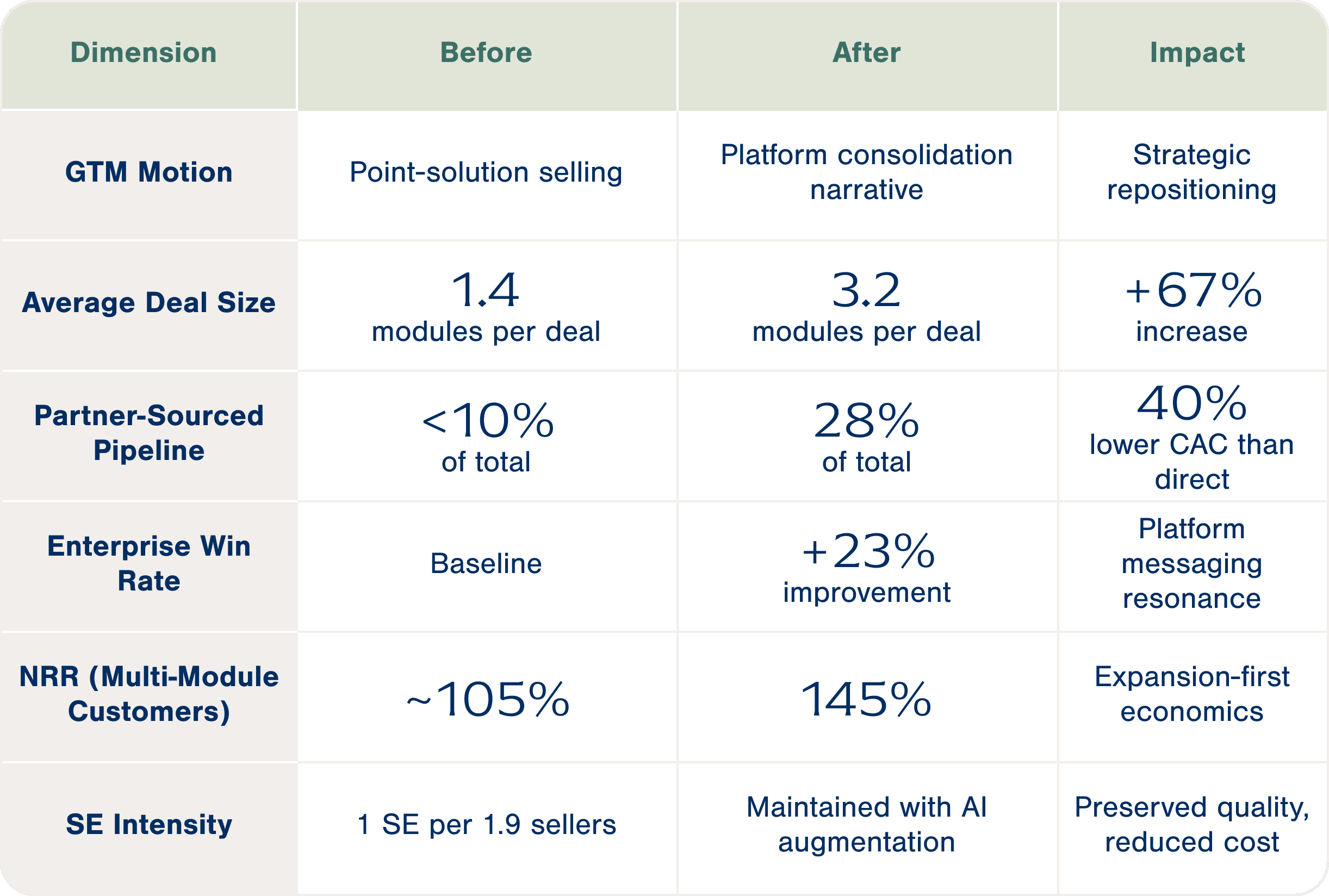
When we moved from pure subscription to a hybrid consumption model with AI add-on tiers, our expansion revenue jumped 34% in two quarters. Customers who adopted the integrated suite achieved 92% gross retention versus 89% for single-product users. The pricing restructure alone reduced our effective CAC by $0.18 per ARR dollar.
chief revenue officer, $1.2 billion cybersecurity platform
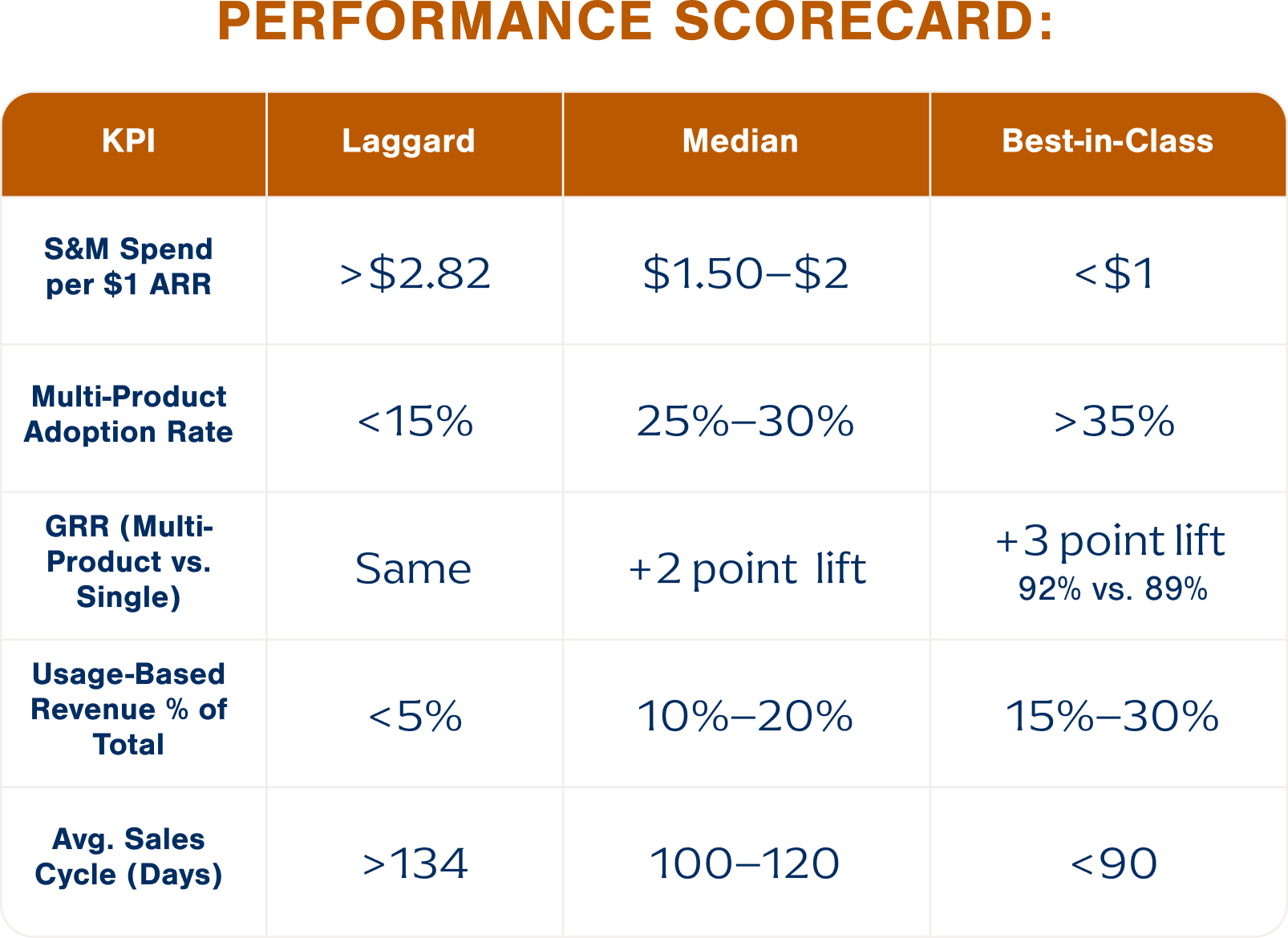
Sector View: Cybersecurity
Security is where packaging discipline decides survival. Enterprises are collapsing sprawling portfolios of point tools toward a handful of consolidated platforms, which turns every renewal into a build-your-platform decision. You’re either the platform absorbing adjacent spend or the point tool being absorbed. Packaging that makes you the consolidation winner rather than the line item cut is the whole game.
Strategy 4
Optimize Coverage Models Through Precision Segmentation
The Problem
Most tech organizations deploy the same coverage model for $5,000 SMB accounts and $2 million enterprise deals. Spray-and-pray isn’t working. Tech generates 45% of pipeline from marketing (vs. 35% in manufacturing) with a 1.5:1 seller-to-marketer ratio (vs. 7:1 in manufacturing), making precise allocation of sales and marketing resources critical to controlling CAC and maximizing productivity.
The Recommended Strategy
Deploy risk- and value-based coverage models that align sales and marketing investments to account value, conversion likelihood and expansion potential:
- Tier accounts by ARR + risk + conversion probability + expansion potential, not just revenue size: Align coverage to account economics. Reserve high-touch ABX and seller capacity for strategic or high-risk accounts, while deploying lower-cost tech-touch motions for the long tail to optimize cost-to-serve.
- Deploy segment-specific marketing budgets and pipeline yield models: Allocate resources based on conversion rates, customer value and expansion opportunity rather than evenly across segments. Spend should concentrate where revenue potential and expected return are highest.
- Build first-party data assets: Better customer intelligence improves targeting, channel selection and resource allocation. 82% of B2B marketers cite first-party data as a top three priority for 2026, and roughly 60% of budgets now support penetration strategies focused on expanding existing customer relationships.
Best Practices
- Implement ICP refinement with buying committee maps. Move from individual lead targeting to buying group orchestration with ABX operating models that improve engagement across high-value accounts.
- Build segment-specific content and campaigns. A verticalization strategy with industry-specific use cases increases conversion rates and reduces wasted spend by aligning investment to the segments most likely to generate growth.
- Deploy partner co-marketing and marketplace strategies. Partner-sourced pipeline can reduce direct CAC by 30%-40% for appropriate segments while providing a lower-cost acquisition channel.
- Measure CAC by segment. Track pipeline coverage, lead-to-revenue conversion, meetings per target account and expansion performance by segment to ensure coverage investments align with account value and growth opportunity.
Case Study: $450M Data Management—Vertical Specialization Drives CAC Efficiency
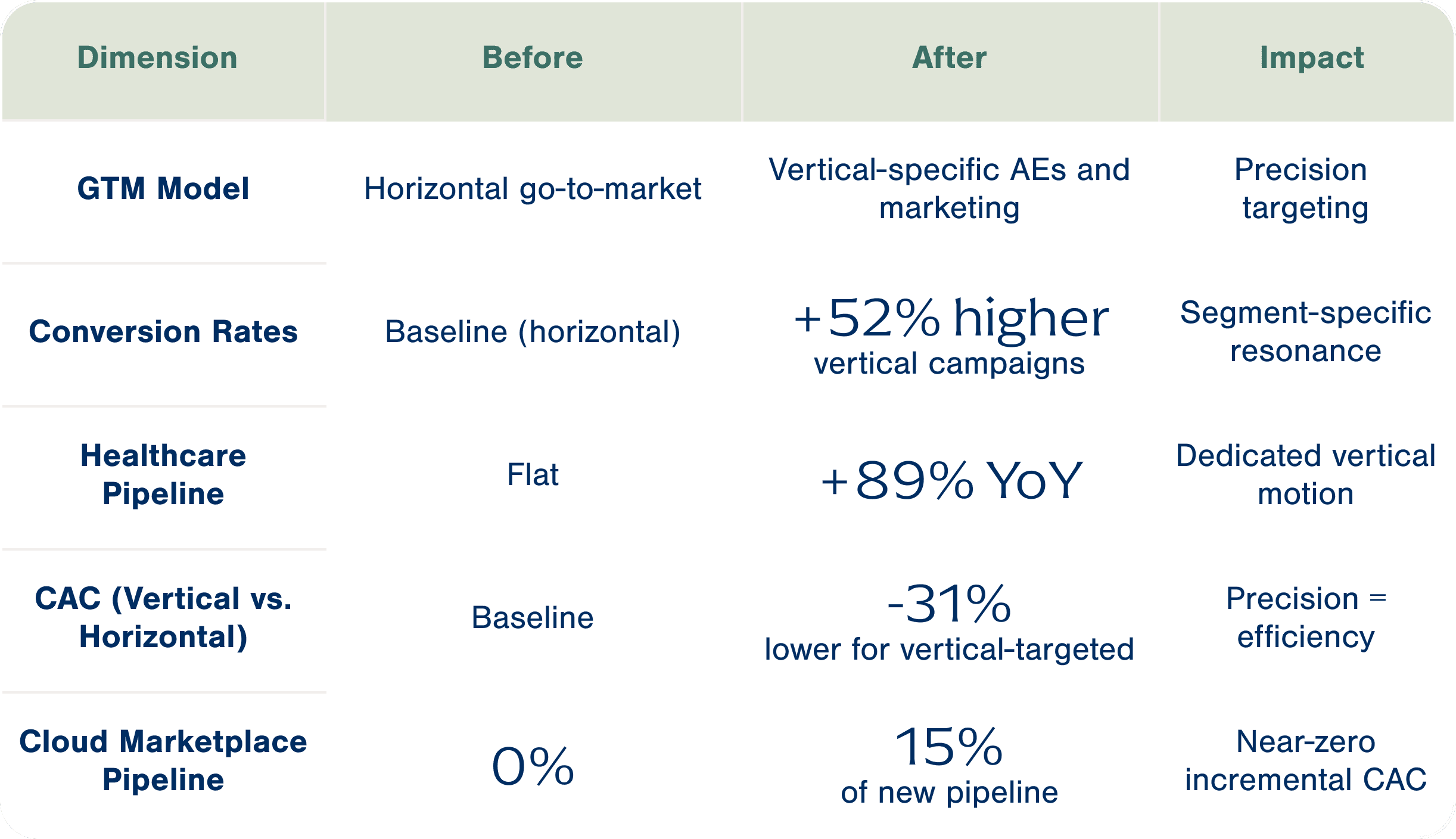
We were deploying the same coverage model for $5,000 SMB accounts and $2 million enterprise deals. When we implemented risk- and value-based tiering with differentiated marketing motions for each segment, our pipeline per marketing dollar improved 41% in enterprise and we reduced cost-to-serve by 28% in SMB through tech-touch automation.
senior vice president of of marketing, $500 million cybersecurity platform
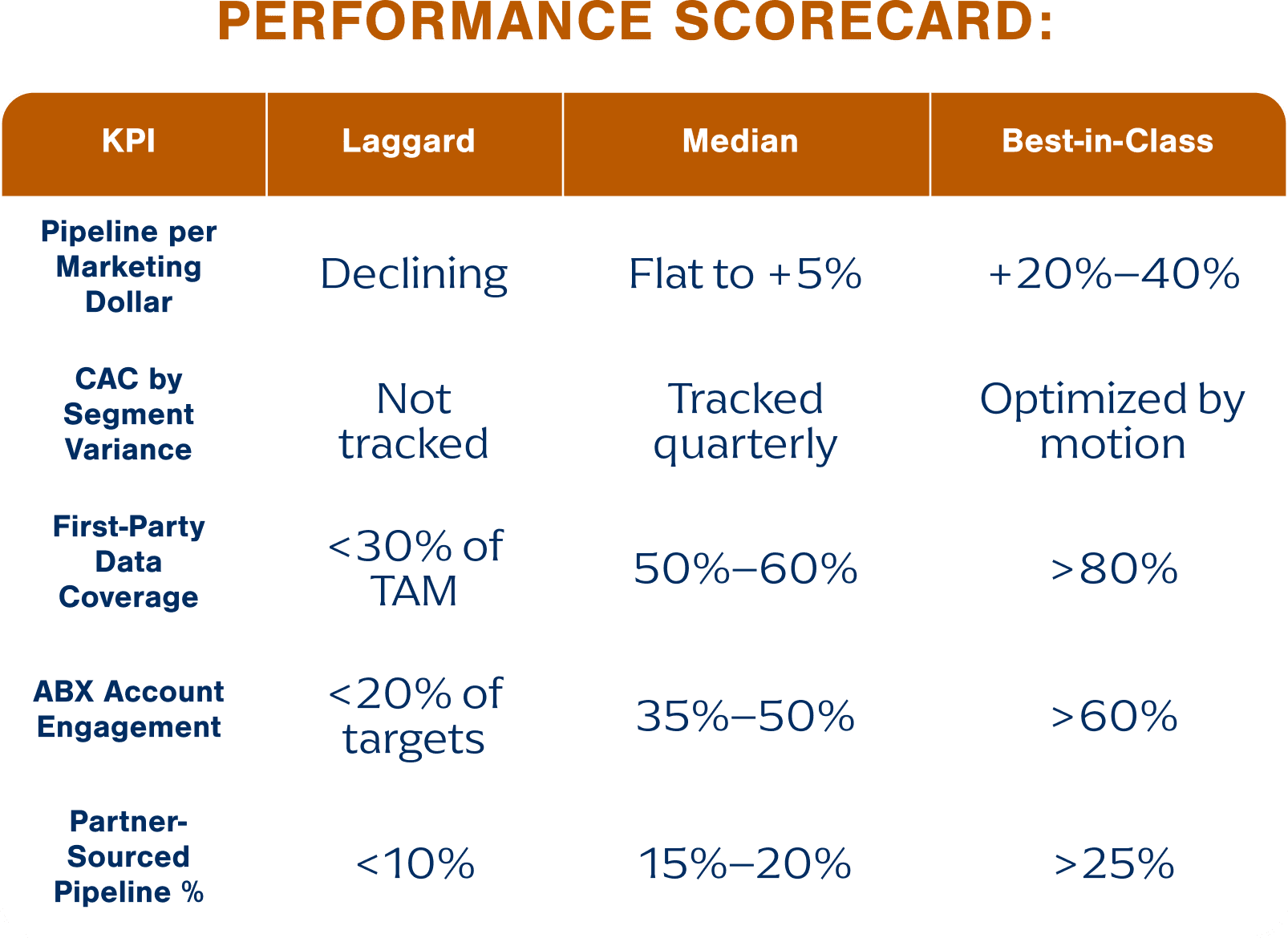
Sector View: Data and Analytics
Data and analytics rewards coverage built around verticals rather than account size. The value lives in the use case, healthcare data governance and financial-services compliance are genuinely different sales, so a horizontal motion leaves win rates on the table. Organizations that tier by industry and staff specialists against regulated verticals convert at rates a generalist model can’t reach, and they catch cloud-migration events as the natural expansion triggers they are.
The Cost of Inaction
The uncomfortable part of this shift is that it doesn’t wait for you to be ready. The gap between the organizations that have rewired for expansion economics and the ones still buying growth at $2 a dollar isn’t holding steady—it’s widening every quarter, because the advantages compound. Higher retention lowers the replacement burden, which frees budget for expansion, which lifts retention again. The movers aren’t just ahead; they’re pulling away on a curve.
And the pressure is arriving from every direction at once. Buyers are rebuilding in-house what they used to license. CFOs have stopped funding growth that can’t prove its return. AI is already bending acquisition costs down for the companies that invested early—and every quarter a laggard waits, that cost curve gets harder to catch. The window where profitable growth is a differentiator is the window that’s closing; soon it will simply be the price of staying in the game.
None of this requires a leap of faith. The playbook is known, the benchmarks are published and the organizations executing it are posting the numbers. What it requires is the decision to stop optimizing a commercial model built for a market that no longer exists—and to start rebuilding for the one that does. The economics of growth have fundamentally changed. Leading organizations are reallocating investment toward expansion, modernizing demand operations, refining pricing structures, and deploying more precise coverage models. The opportunity is not simply to reduce CAC. It is to build a more productive, scalable and resilient growth engine for the years ahead.
More Resources