Secure Winning Sales Edge in 2026 with Smart Tech Investments
Successful AI adoption with a human touch will be the leading differentiator between commercial organizations that are driving growth versus those that fall behind.
In 2025, artificial intelligence (AI) became the buzzword of business. And although some are hesitant to trust AI’s capabilities, Alexander Group’s latest report confirms that companies who have made strategic investments in AI for their commercial function are already seeing positive results—for both sellers and buyers.
Survey respondents who believe AI will drive revenue growth
Our Report
Alexander Group’s latest Innovating Customer Engagement with AI Report collected over 95 responses from senior leaders and held over 35 interviews with B2B commercial executives.
The findings revealed that commercial leaders faced several headwinds that contributed to revenue decline, including inflation and interest rates, industry competition, talent dynamics and customer expectations. However, there was one market force that stood apart as a clear revenue growth driver: AI adoption.
Alexander Group’s latest report focuses on organizations that have successfully incorporated this new technology into their commercial function to enhance sales coverage, how others can follow suit and why human touch endures throughout.
Today’s Modern Selling Experience
Instead of following traditional sales practices—where sellers and buyers rely on a fully manual sales process that can slow everything down—companies can prioritize investing into one of two approaches:
Intelligent sales, which focuses on enabling sellers through tools such as coaching, training and guidance.
With this approach, sellers will use conversation intelligence, AI-driven sales coaching, automated workflows and other automation tools to enhance productivity and personalization.
Autonomous sales, which centers around empowering customers by providing tools to enhance the buying experience and boost satisfaction.
In this model, innovative technology like AI agents can streamline the sales process as well as help buyers understand, compare, configure and purchase complex offerings.
Both approaches ultimately drive four key outcomes:
Scale: Grow efficiently
Velocity: Grow at speed
Value: Enhance customer experience and buyer return on investment
Knowledge: Augment capabilities
Where should commercial organizations get started? Intelligent sales or autonomous sales?
The report found that successful companies started with intelligent sales first, and these organizations typically began by building or buying AI tools from third parties. By starting with intelligent sales, companies have an opportunity to safely validate these tools internally and make any necessary adjustments.
The tools that are being tested within the organization can also usually be used externally, meaning that a company’s intelligent sales process will serve as the foundation for building out the autonomous sales process.
Ready to schedule an exclusive briefing call to get the full findings?
How AI-Powered Sales Transforms the Traditional Seller Role and Buyer Journey
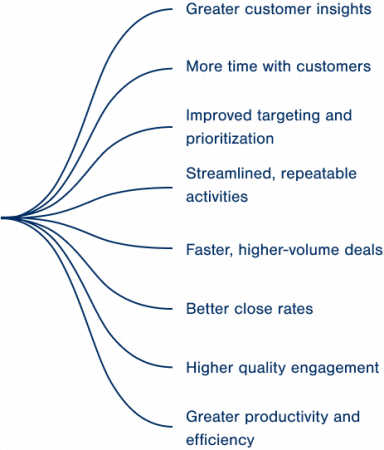
The introduction of intelligent and autonomous sales is redefining commercial seller focus to boost engagement speed and volume, driving greater productivity and efficiency.
With both approaches, sellers now see:
Across the buyer journey, leading organizations are leveraging AI to streamline every stage.
In pre-sales, autonomous sales tools help sellers identify and prioritize outbound leads—resulting in improved deal volume and close rates. With inbound lead management, autonomous AI agents conduct outreach and manage inbound inquiries—giving customers faster, more relevant responses.
During the sales process, intelligent sales enables sellers with real-time expertise to improve win rates and deal sizes. Also, autonomous sales reduces sales costs by allowing customers to configure products, access pricing and complete purchases independently through self-service portals.
At the post-sales stage, both intelligent sales and autonomous sales play an important role. Both approaches allow for reduced downtime and increased service efficiency for preventative maintenance. For customer service management, intelligent sales and autonomous sales streamline service and boost case deflection as well.
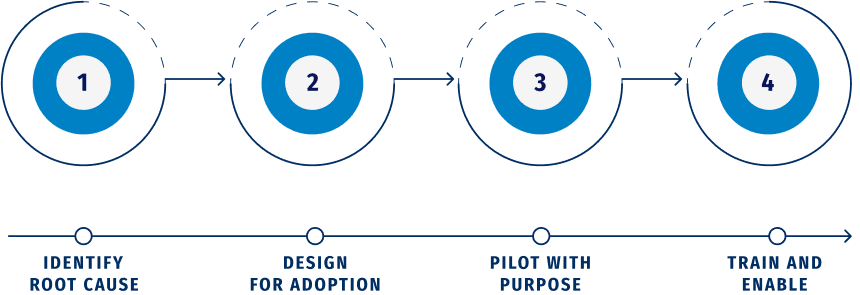
Best Practices For Driving AI Adoption
After speaking with companies who have shared their success with AI-enablement, here are four key takeaways that companies should keep in mind.
The future of sales belongs to commercial organizations that combine smart technology with the irreplaceable value of human connection.
Why The Human Element Will Always Be Important
Regardless of the approach an organization chooses to start with, leaders must remember one cardinal rule for AI adoption:
Human Touch Endures.
Automation should never compromise responsiveness or personalization, because human interactions remain a differentiator.
Our survey shows that people who use AI the most were the same ones who continuously stated the importance of needing people in sales.
AI can do a lot, but it can’t replace human interaction. Remembering that AI-enabled sales is an enhancement, rather than a replacement, is what keeps relationships strong with the customer base and differentiates great companies.
Join the leaders who are transforming their commercial organization with AI.
Now is the time to evaluate your strategy and ensure your company is positioned for success in 2026 and beyond.
Fill out the form below to schedule your exclusive briefing call and get actionable insights from Alexander Group’s latest research report, including how smart tech can help you accelerate growth and deliver standout customer experiences.