Whether adapting to market volatility, integrating AI or accelerating growth, commercial leaders should turn one lever to drive 2026 results: sales compensation
Sales compensation is how you turn strategy into action. How you reward your sellers reveals when strategy succeeds in driving performance or when it breaks down. Alexander Group’s 2026 Sales Compensation Trends Survey highlights six trends shaping how organizations are rethinking plan design, governance, quotas and talent strategies—and how leading companies are pulling ahead.
Why This Matters
For over 25 years, our firm has conducted sales compensation trends surveys to provide senior leaders with a clear understanding of the factors impacting sales compensation programs.
In last year’s survey, many organizations saw managing uncontrollable external factors as a primary concern.
But in 2026, the story shifts—from uncertainty to competition.
According to 77% of respondents, market and industry competition is now the top external factor influencing sales compensation programs. This year’s results highlight how leading organizations “met the moment” of market uncertainty last year by adapting their compensation programs to be more agile and predictable. That shift is now shaping where leaders are focusing their efforts.
After speaking with hundreds of companies across 11 different industries, here are the six key areas that commercial leaders are prioritizing to stay competitive in 2026:
I. Ongoing Focus on Growth and Productivity:
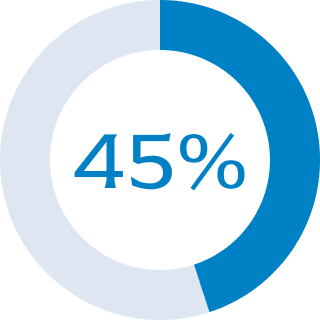
On average, firms are predicting 8.3% revenue growth in 2026—slightly higher than the 2025 survey. Companies expect higher revenue growth and more sellers (55%) to achieve quota in 2026. Yet, improving overall productivity remains a top sales comp plan challenge for 45% of survey respondents.
is the average predicted revenue growth in 2026—slightly higher than the 2025 survey
of survey respondents say improving overall productivity remains a top sales compensation plan challenge
II. Demand for Qualified Talent Amidst AI Impacts
About 58% of companies expect to increase headcount in 2026, with a focus on hiring for overlay roles. While this is a 10% decrease from last year, it coincides with growing expectations that AI will reshape how work is performed across go‑to‑market roles. Between 88–90% of firms expect AI to positively impact GTM roles, with the highest impact on jobs with repetitive tasks.
About 58% of companies expect to increase headcount in 2026
Between 88–90% of Firms expect AI to positively impact GTM roles
III. Increases in Sales Comp Costs Approaching Normal Levels
For several years, our survey found that sales compensation costs saw a steady increase. Although sales compensation budgets are projected to rise by 2.7%, the cost of sales is expected to remain fairly flat. This follows a broader market trend, as WorldatWork’s Salary Budget Survey 2025-2026 reports that salary increase budgets in the United States are moving downward from 4.1% two years ago to 3.6% (for decades, this metric has hovered around 3%).
projected rise of sales compensation budgets
IV. Adapt Sales Comp to Go-to-Market (GTM) and Market Dynamics
Sales Compensation Plans
97%
of companies made changes to their 2026 sales compensation plans. Sales strategy shifts, ineffective plans and sales organization changes were the top three reasons for change. At the same time, 66% are leaning further into pay-for-performance.
External Market Conditions
70%
of companies adjusted practices due to external market conditions, and the data suggests that pressure may be shifting inward—toward sharpening the design, execution fundamentals and governance.
V. Improve Sales Comp Governance and Efficiencies (Use AI)
65% of firms say they need to improve their sales compensation governance and program management practices. Alongside strengthening governance, companies are also aiming to improve efficiency with AI enablement. 64% of companies have enabled AI in one use case and four AI solutions are used on average.
VI. Struggles with Quota Setting and Allocation Practices
Quota challenges have risen to the number one concern in 2026. 57% of companies struggle to set accurate quotas for plan designs, and the top program management challenge is allocating the quotas/goals on time (46%)—making quota execution a persistent operational pain point.
How should commercial leaders respond to these trends?
In addition to asking participants to share insights into sales results, costs, talent practices and program management, the survey also asks respondents to rate their organization’s sales compensation plan effectiveness from the past year. According to the 2026 survey, approximately 1/5* of companies said that their sales compensation plans from 2025 were very effective—the highest rating on the scale.
Notably, this year’s percentage follows a key pattern that we’ve seen over the past five years of conducting this survey where, on average, 21% of companies rated their sales compensation plans highly—and they had the results to back that rating up.
We call these organizations the 21%ers.
The gap between intent and execution is where most programs struggle and where top performers differentiate. These organizations separate themselves from the pack through outstanding execution across five areas, which are the five tenets of world-class sales compensation programs:
Philosophy and Principles
Growth Strategy and Jobs
Sales Compensation Expertise
Governance and Operations
Change Management
The full findings break down what these top performers are doing differently, where most programs are getting stuck and how you can follow in the footsteps of the 21%ers.
*Sources: 2025-26 Alexander Group Sales Compensation Trends Survey
Take your sales compensation program planning from a yearly administrative exercise to a strategic growth lever.
Schedule a complimentary briefing call with one of our sales compensation experts to walk through the 2026 Sales Compensation Trends survey results and discuss what these trends mean for your organization’s GTM roles, quotas and costs.
Schedule a Briefing
Respond to Business Challenges with Sales Compensation
These survey trends illustrate the complex and rapidly evolving market environment that commercial leaders are facing. How can effective leaders use sales compensation to navigate these issues?
By turning to the five core tenets of sales compensation:
Philosophy and Principles
Growth Plays and Jobs
Sales Compensation Expertise
Success Measurement
Change Management
The trends highlighted by this year’s survey demand a strategic response. Take a closer look in the next section at the five core tenets of sales compensation and share real-world examples of how leaders are putting each tenet into practice.